
Northern Vietnam’s Humid Season: How to Prevent White Mold and Discoloration on Woven Rattan and Bamboo Products
Every year, when the humid season returns to Northern Vietnam, high humidity causes many household and decorative items to become damp and take longer to dry. Woven rattan and bamboo products are particularly sensitive to humid environmental conditions. Without proper storage and maintenance, rattan baskets, bamboo trays, woven lamps, and handicrafts can quickly develop white mold, musty odors, and discoloration.
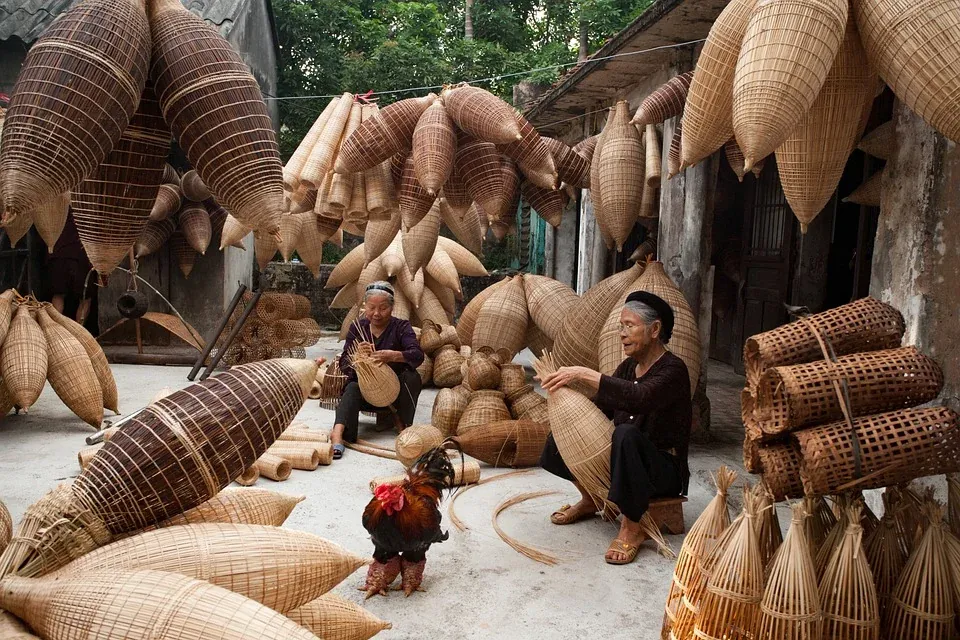
1. Why Are Woven Rattan and Bamboo Products Prone to Mold During the Humid Season?
Both rattan and bamboo are natural materials that are significantly affected by environmental conditions. During the humid season, moisture in the air can accumulate on product surfaces and become trapped within the gaps of woven structures. If products are not properly dried or continue to be stored in damp environments, conditions become favorable for mold growth.
Industry references on rattan and bamboo manufacturing also highlight high ambient humidity, inadequate material treatment, and insufficient drying as key factors that increase the risk of mold development.
Initially, mold may appear as a few small white spots on the surface. Over time, these spots can spread into larger patches, accompanied by a characteristic musty odor. The natural color of rattan and bamboo may gradually lose its original brightness, becoming dull and uneven.
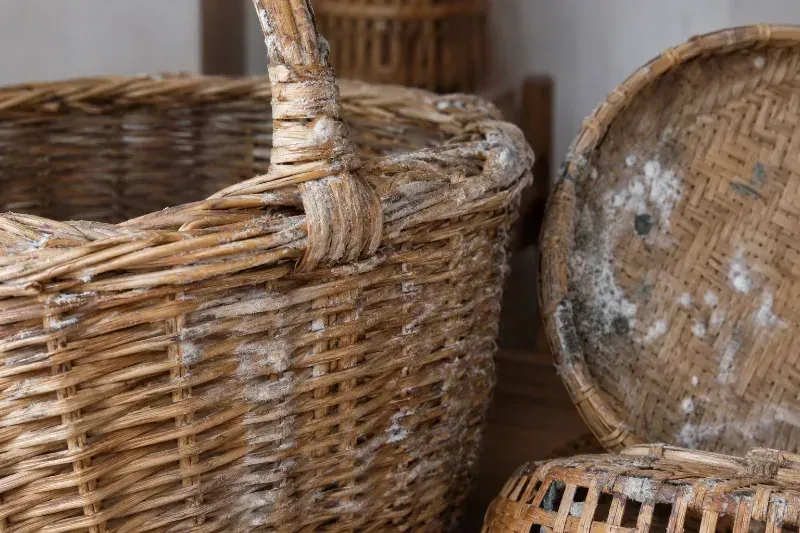
Importantly, mold does not affect only products that have been used for a long time. Newly manufactured woven rattan and bamboo products can also develop mold during storage if they have not been properly treated and protected, particularly during prolonged periods of high humidity.
2. White Mold Does More Than Affect Appearance
Customers choose rattan and bamboo products not only for their design but also for their natural colors and the clean, attractive appearance of the materials. White mold spots and discolored areas can therefore significantly reduce a product’s aesthetic appeal and perceived value.
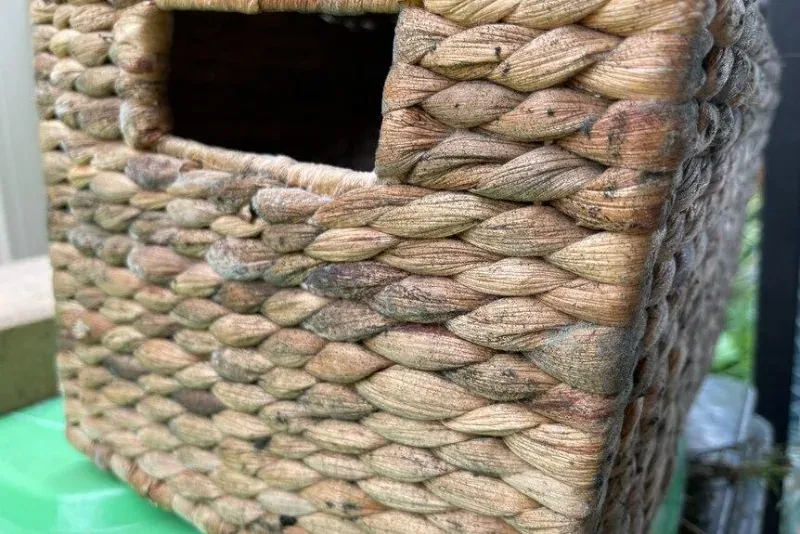
For manufacturers producing goods in large quantities, the issue is even more significant. Products may need to be stored or transported for extended periods before reaching customers. If mold develops during this time, businesses may incur additional costs for cleaning, sorting, and reprocessing affected products.
Therefore, rather than waiting until mold becomes visible before taking action, proactively managing mold risks during production and storage is a more effective approach.
3. Does Sun-Drying Help Remove Mold from Rattan and Bamboo Products?
Sun-drying is a familiar method for addressing moisture in rattan and bamboo products. On dry, sunny days, placing products in a well-ventilated area exposed to sunlight can help release moisture and speed up the drying process.
However, this method is not always practical during the humid season. Prolonged damp weather and limited sunlight make drying difficult to manage, especially for facilities handling large volumes of products. Furthermore, even after drying, rattan and bamboo products can absorb moisture again when returned to a humid environment. This is particularly problematic in woven gaps, corners, and other areas where air circulation is limited.
For this reason, protecting woven rattan and bamboo products requires more than simply relying on sunlight. Attention should be given to cleaning, drying, and storage conditions throughout the process. Well-ventilated storage facilities with controlled humidity can help prevent moisture reabsorption and reduce the risk of mold growth during humid weather.

4. How to Reduce Mold Growth on Rattan and Bamboo During the Humid Season
First, products should be adequately dried before packaging and storage. Storage areas should also be kept clean and well-ventilated, while products should be kept away from floors and areas where moisture tends to accumulate.
However, for manufacturers producing woven rattan and bamboo products on a large scale, environmental control alone may not be sufficient. Incorporating specialized anti-mold treatments into appropriate processing and finishing stages can help businesses take a more proactive approach to protecting finished products, particularly those that require long-term storage or extended transportation.
5. Anti-Mold Solutions for Woven Rattan and Bamboo Products
Rattan and bamboo are natural materials valued for their aesthetic appeal, but they are also susceptible to moisture and mold during production, storage, and transportation.
Recognizing these challenges, GTS Quốc Tế focuses on researching and developing solutions that support mold control and disinfection for rattan, bamboo, decorative wood, and woven products. These solutions are designed to help businesses take a more proactive approach to protecting material quality throughout the supply chain.
The key principle is to manage mold risks before they develop into visible problems, rather than waiting until white mold, discoloration, or material deterioration appears before taking corrective action.
The treatment helps form a protective layer on the material surface, limiting mold growth and the effects of harmful agents. This contributes to maintaining the natural color, cleanliness, and consistent quality of rattan and bamboo products throughout storage.
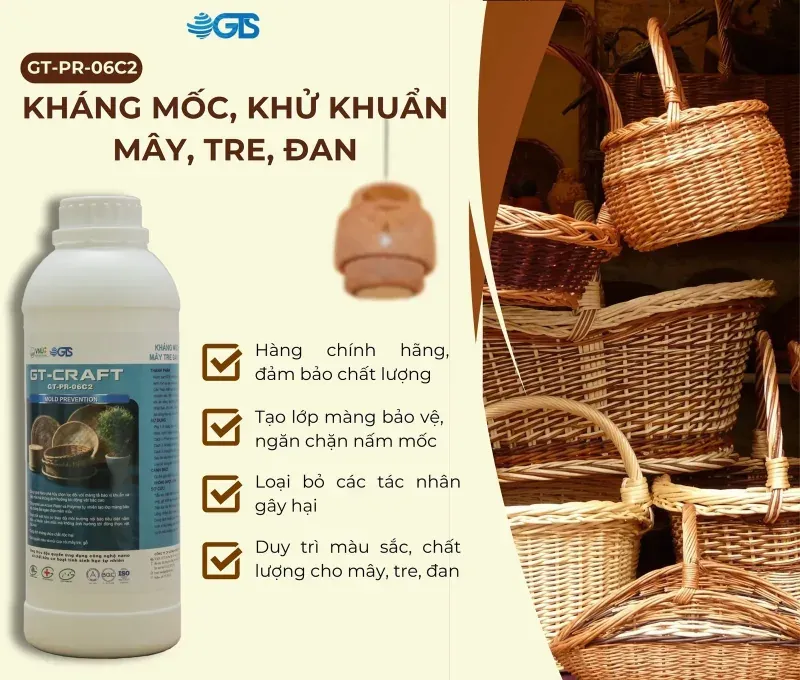
Depending on the material characteristics and manufacturing process, the solution can be incorporated into suitable processing stages after fabrication, before packaging, or during storage.
Through this approach, GTS Quốc Tế aims to provide a proactive, end-to-end protection solution for rattan and bamboo products. Beyond supporting mold prevention and disinfection, the solution helps maintain the aesthetic appeal and product quality from the manufacturing workshop through finishing and warehouse dispatch.
Control Mold Growth — Preserve the Value of Rattan and Bamboo
Rattan and bamboo are valued for their natural, rustic, and refined beauty. Proactive mold control is therefore an important way to preserve product quality and value throughout production, storage, and transportation.
GTS Quốc Tế develops solutions to support mold prevention and disinfection for rattan, bamboo, and woven products, addressing practical needs for finished-product protection.
Are your rattan and bamboo products prone to mold, or do you need a suitable protection solution for storage and transportation? Contact GTS to discuss your materials and manufacturing processes so that we can help identify an appropriate treatment approach for your needs.
Hotline: 0978.830.006 (Ms. Thy Thơ)
Email: [email protected]
GTS Quốc Tế — Your Partner in Protecting Material Quality and Value.